Tag: backing

  • Guess who’s back, back again?

    Last time we explored which of this year’s lead artists have been involved before in the Eurovision Song Contest. However, one of the drivers of Six on Stage is to highlight the contributions of backing performers, so it’s time to look at which of the class of 2024’s other performers – dancers, backing vocalists and people dressed in bird costumes – have been involved before.

    Once…

    Seven backing performers have each had one previous appearance at Eurovision.

    Three of Sweden’s dancers – this year’s Melodifestivalen house dancers, in fact – have taken part previously: Daniel Koivunen for Russia in 2011 (he was on a treadmill with Robin Bengtsson in the national final but didn’t go to Eurovision), and both Pauline Eddeborn and Kim Pastor for Malta’s Destiny in 2021.

    Aiko’s off-stage singer Nikol Držmíšková performed the same role for We Are Domi in 2022, while Saba’s backing vocalist and Sand co-writer Melanie Wehbe was on stage with Michael Rice in 2019. Íris Hólm Jónsdóttir, who you’ll be surprised to hear is part of Team Iceland, previously did backing vocals in 2015 alongside Hera Björk.

    The other dancer to have appeared once before is Jesse Wijnans, returning for Finland one year after doing the Cha Cha Cha with Käärijä.

    Twice…

    Three people have had supporting roles on two previous occasions – one of them as a winner.

    Erasmia Markidi is providing backing vocals for Greece, having done so in 2017 and 2019. The fourth Melfest house dancer, Kenny Lantz, is finally on stage for Sweden – he previously danced alongside other Swedes for Cyprus’s Tamta in 2019 and for Switzerland’s Remo Forrer in 2023.

    And returning from 2016’s winning team is Oleksandra Makarovska, once again singing for Ukraine, as she also did last year.

    Four times…

    Pamela Bezzina, a singer and vocal coach who has taken part as a contestant in Malta’s national final numerous times, is this year providing backing vocals for them for a fifth time.

    She was on stage (as then required) in 2010, 2011 and 2016, and also part of the team in 2016 and 2018. In 2014, instead of singing she took part as a member of Malta’s professional jury.

    Seven times!

    Victoria Chalkitis is making her eighth appearance at Eurovision with off-stage backing vocals for Cyprus. She’s also serving as Silia Kapsis‘s vocal coach.

    Victoria is an incredibly experienced backing vocalist, with those seven appearances stretching right back to 1993, when she sang for the first time for Greece. She joined them again in 1994 (alongside her father, Harris Chalkitis), 2008, 2012 and 2018.

    She was part of the onstage team for Belarus in 2005 and would have sung vocals for Moldova in 2020 if the contest hadn’t been cancelled – she ended up supporting Natalia Gordienko in 2021 instead. Like Pamela Bezzina, she has been a national juror too, for Greece in 2022.

    With a gap of 31 years once she’s sung for Cyprus next week, Victoria is second only to Ralph Siegel (34 years) as the performer with the longest gap between their first and most recent appearance at Eurovision.

    Twelve times!

    An update to this blog post as another backing singer has come to light who immediately knocks Victoria off the top spot: the legendary Dea Norberg! Dea performed backing vocals for Austria, now the fifth country she has represented at Eurovision after her native Sweden, Malta, Azerbaijan and Australia (for Dami Im!).

    It’s fitting she returned the year we celebrate the 25th anniversary of Take Me To Your Heaven as that was her first, victorious, appearance on the Eurovision stage. Returning this year moves her up to 5th in the table of longest gaps between first and last appearance, and moves her to joint 4th in the list of most countries represented.

    She remains 3rd behind only brothers Georges and Michel Costa for most songs performed at Eurovision with 13!
  • Who’s had the most Eurovision roles?

    There are lots of roles at the Eurovision Song Contest and plenty of people have taken on more than one – not least every songwriter who’s delivered their own song on stage. But who has performed the most roles at Eurovision?

    First, some caveats. We’re talking about people representing their country. There are lots of roles at Eurovision beyond this – in TV production, website and social content, stage management, etc. But when it comes to countries’ participation, Six on Stage identifies the following specific roles:

    • Lead artist – the credited singer or group for an entry
    • Backing performer – dancer, backing vocalist, puppeteer – anyone performing an entry on stage who’s not the lead artist
    • Songwriter – you’ll see this broken down into composers and lyricists on song pages (and where that information isn’t available we list credited writers as both), but for this analysis we’re considering the role of writer as a single one
    • Jury member – someone who has been a member of a country’s professional jury
    • Spokesperson – someone who has announced the country’s scores (or, in the current format, their jury’s 12 points)
    • Host – slightly different as it’s not linked to any entry and only the host country provides these each year, but we record this not least because so many hosts have also been involved in other ways
    • Other – we’ve started trying to note creative directors, choreographers, stylists… This is pretty much unlimited and dependent on suitable sources so is never going to be complete. That’s why it’s a generic “Other” category.

    Lots of people fall into three or four of these categories as it’s common for a singer-songwriter to also serve on their country’s jury and sometimes be a spokesperson too, but two people in the Six on Stage database fall into five categories.

    Germany’s Stefan Raab has a long history with the Eurovision Song Contest and that’s reflected in the number of roles he had between 1998 and 2011. He was his country’s named artist in 2000 with Wadde hadde dudde da?, which he also wrote; he wrote and was a backing performer for Max Mutzke‘s 2004 entry; he wrote the legendary Guildo Hat Euch Lieb and turned up to “conduct” the orchestra (who weren’t playing); and finally in 2011 he was one of the Contest’s hosts in Düsseldorf.

    The only person who can match this is Slovenia’s Lea Sirk, and arguably her six roles count more strongly as they don’t include hosting. Her first involvement was actually in 2012 as a jury member before going on to provide backing vocals for Tinkara Kovač in 2014 and ManuElla in 2016. She’s best known for her own entry in 2018, Hvala, ne!, which she also co-wrote, and returned a year later to reveal her country’s jury scores.

    Now if Stefan could come back and sit on Germany’s jury or Lea could host for Slovenia, they could complete the set…

  • Two-time winners

    Two-time winners

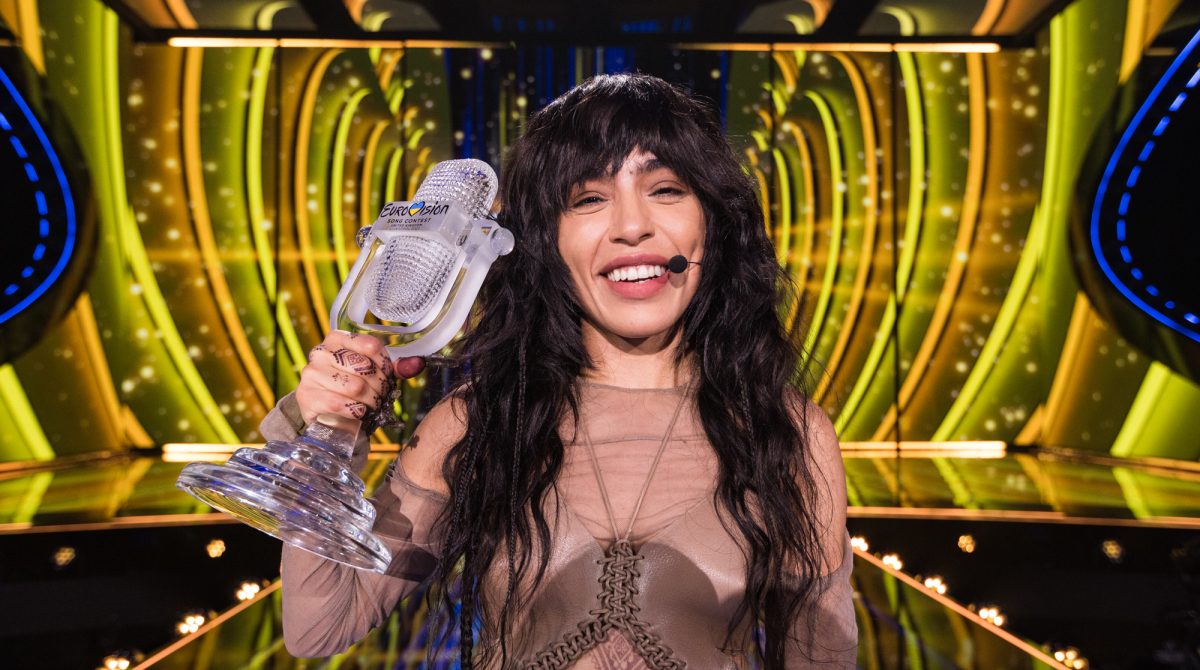
    With her victory in Liverpool, Loreen became only the second person – and the first woman – to win the Eurovision Song Contest twice as a lead artist.

    The other person to have achieved the feat is, of course, Johnny Logan, who has the distinction of also having one twice as a writer: for Hold Me Now and for Linda Martin’s Why Me. Like Logan, Loreen was a credited writer only on her second winning song.

    But Loreen wasn’t the only person to achieve a second win this year. Two of the other writers of Tattoo were also writers of Euphoria: the prolific Thomas G:son, who has had 15 songs at Eurovision for 7 different countries (plus a 16th/8th if you include France’s 2020 entry), and Peter Boström, whose previous achievement involving Euphoria was having written the songs that came both first and last in the 2012 final. (Ironically, that last placed song, Norway’s Stay, is his only Eurovision song not co-written with G:son.)

    They join a select group of writers with multiple Eurovision victories:

    • Willy van Hemert (Netherlands 1957 and 1959)
    • Yves Dessca (Monaco 1971, Luxembourg 1972 – notable for winning with different countries, in successive years, and having a 100% success rate with his only two Eurovision entries)
    • Rolf Løvland (Norway 1985 and 1995 – and as artist for the latter as a member of Secret Garden)
    • Johnny Logan (Ireland 1987 and 1992)
    • Brendan J. Graham (Ireland 1994 and 1996)
    • Thomas G:son (Sweden 2012 and 2023)
    • Peter Boström (Sweden 2012 and 2023)

    No writer has yet had three wins – if anyone for that list is going to achieve another, it’s G:son or Boström.


    We should also note that a number of backing singers have been involved with winning songs, some more than twice. They are:

    Finally there are a handful of conductors. Back in the days of the orchestra, many conductors were regular fixtures for their countries and could also conduct for another country when Eurovision was on home soil. Consequently, three conductors have held the baton for multiple Eurovision winners: Dolf van der Linden (Netherlands 1957 and 1959 and Ireland 1970); Franck Pourcel (France 1958, 1960, 1962 and 1969); and the most prolific of all Eurovision conductors, Noel Kelehan (Ireland 1980, 1987, 1992, 1993 and 1996).